Interesting Facts About Bwindi’s Mountain Gorillas

Must-Pack Items for a Bwindi Gorilla Trekking Trip.
June 13, 2026
Best Time of Year to Visit Bwindi Impenetrable National Park.
June 14, 2026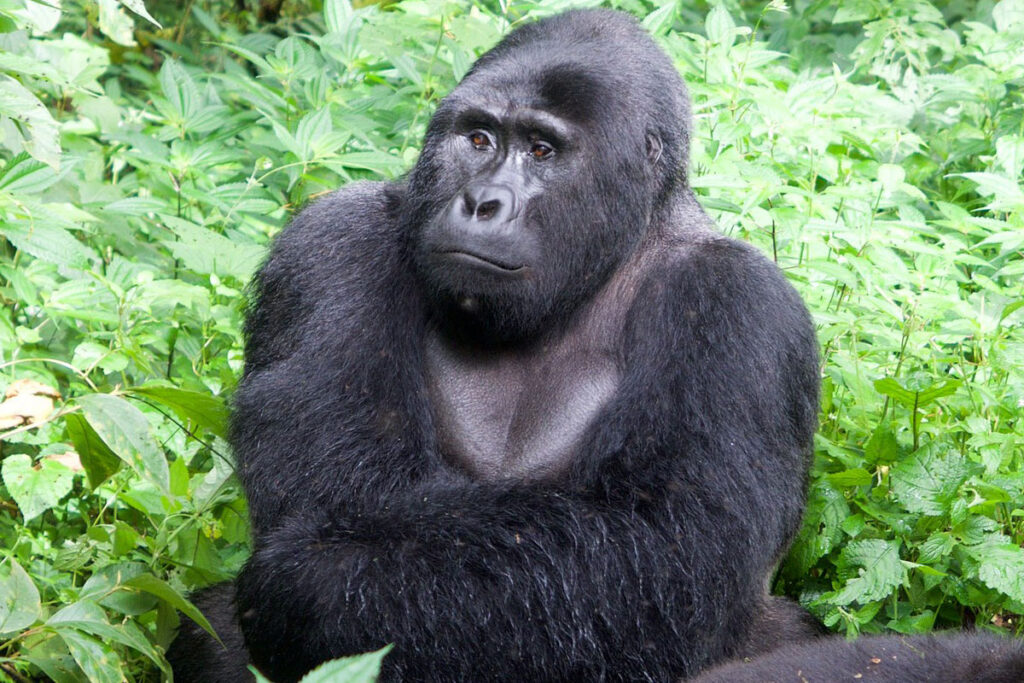
Interesting Facts About Bwindi’s Mountain Gorillas.
Interesting facts about Bwindi Mountain Gorillas, Hidden within the mist covered jungles of Bwindi Impenetrable National Park lies one of Africa’s most extraordinary wildlife treasures the endangered mountain gorilla. Every year, travelers from around the world journey into this ancient rainforest to witness these remarkable primates in their natural habitat. Beyond their impressive size and human like expressions, Bwindi’s mountain gorillas possess fascinating behaviors, emotional intelligence, and social structures that continue to amaze scientists and tourists alike.
Located in southwestern Uganda, Bwindi is home to nearly half of the world’s remaining mountain gorilla population. The forest itself is one of the oldest ecosystems in Africa and provides the perfect habitat for these gentle giants. As conservation efforts continue to succeed, interest in gorilla trekking and gorilla conservation grows stronger each year.
In this article, you will discover interesting facts about Bwindi’s mountain gorillas, their lifestyle, behavior, communication, habitat, and the conservation efforts protecting them. Whether you are planning a gorilla trekking safari or simply love wildlife, these facts will deepen your appreciation for one of nature’s rarest creatures.
1. Bwindi Hosts Nearly Half of the World’s Mountain Gorillas
One of the most remarkable facts about Bwindi is that it shelters almost half of the global population of mountain gorillas. These endangered primates are found only in Uganda, Rwanda, and the Democratic Republic of Congo.
Bwindi’s dense rainforest is home to several habituated gorilla families that tourists can visit during gorilla trekking experiences. Because of continuous conservation efforts, the mountain gorilla population has gradually increased over the years, making Bwindi one of the greatest conservation success stories in Africa.
Furthermore, the park’s thick vegetation, steep hills, and cool climate create the ideal environment for mountain gorillas to thrive naturally.
2. Mountain Gorillas Share About 98% of Human DNA
Another fascinating fact is that mountain gorillas share approximately 98% of their DNA with humans. Because of this close genetic relationship, gorillas display many human-like behaviors and emotions.
For example, they show affection, sadness, anger, curiosity, and playfulness. Mothers care deeply for their infants, while young gorillas often wrestle and play just like human children.
Additionally, gorillas use facial expressions, gestures, and sounds to communicate with one another. During a trekking experience in Bwindi, many visitors are surprised by how emotionally expressive these animals appear.
3. Bwindi’s Gorillas Live in Family Groups
Mountain gorillas are highly social animals that live in organized family groups known as troops or gorilla families. Each group is usually led by a dominant male called a silverback.
The silverback is responsible for:
- Protecting the family
- Leading daily movements
- Resolving conflicts
- Finding feeding areas
- Caring for younger gorillas
Interestingly, some gorilla families in Bwindi consist of more than 15 members, while others are much smaller. The bond between family members is incredibly strong, and they spend much of their day grooming, feeding, and resting together.
Because of these close relationships, observing a gorilla family in the wild feels both emotional and unforgettable.
4. Silverbacks Are Extremely Powerful
The silverback gorilla is one of the strongest primates on Earth. Adult males can weigh over 180 kilograms and possess immense upper-body strength.
Despite their strength, silverbacks are generally calm and peaceful animals. They rarely attack unless they feel threatened or need to defend their family.
When danger approaches, a silverback may:
- Beat its chest loudly
- Roar aggressively
- Charge briefly
- Break vegetation to intimidate threats
Fortunately, gorilla trekking rules help maintain a safe distance between tourists and gorillas, minimizing stress for the animals.
5. Mountain Gorillas Are Mostly Vegetarian
Many people assume gorillas eat meat regularly, but mountain gorillas are primarily herbivores. Their diet mainly consists of:
- Leaves
- Bamboo shoots
- Wild celery
- Roots
- Fruits
- Tree bark
In Bwindi Forest, gorillas spend a large portion of their day feeding because they need significant amounts of vegetation to sustain their large bodies.
Moreover, gorillas play an important ecological role by dispersing seeds throughout the forest, helping maintain biodiversity within the ecosystem.
6. Every Gorilla Has a Unique Nose Print
Just like humans have fingerprints, mountain gorillas have unique nose prints. Researchers and trackers identify individual gorillas by the distinct wrinkles and patterns around their noses.
This method helps conservationists monitor gorilla populations, track family movements, and record births or health conditions.
Interestingly, experienced guides in Bwindi can recognize many gorillas instantly simply by observing their facial features and nose patterns.
7. Gorillas Build New Nests Every Night
Another interesting behavior of Bwindi’s mountain gorillas is nest building. Every evening, gorillas create fresh sleeping nests using leaves, branches, and vegetation.
Adult gorillas usually build nests on the ground, while younger gorillas may sleep in trees for added safety and comfort.
These nests provide:
- Warmth
- Comfort
- Protection from insects
- Shelter during rain
By sunrise, the gorilla families leave their nests and continue searching for food throughout the forest.
8. Baby Gorillas Are Extremely Playful
Young mountain gorillas are among the most entertaining animals to observe in Bwindi Forest. They spend hours:
- Climbing trees
- Swinging on vines
- Wrestling with siblings
- Chasing each other
- Rolling through vegetation
This playful behavior helps young gorillas develop important survival and social skills.
During gorilla trekking, tourists often find the infants and juveniles especially memorable because of their energetic and curious personalities.
9. Gorilla Communication Is Surprisingly Advanced
Mountain gorillas communicate using more than 20 different vocal sounds. These sounds help them express emotions, warn family members, and maintain social bonds.
Some common gorilla vocalizations include:
- Grunts
- Hoots
- Roars
- Screams
- Soft purring sounds
In addition to sounds, gorillas use body language extensively. Chest beating, eye contact, posture, and facial expressions all carry important meanings within the group.
Consequently, gorilla families maintain strong social organization even in dense rainforest environments.
10. Bwindi Gorillas Are Habituated for Tourism
One of the reasons tourists can safely observe mountain gorillas is because of a process called gorilla habituation. Habituation gradually trains gorillas to become comfortable around human presence without changing their natural behavior.
This careful process can take several years and involves trained researchers, trackers, and conservationists spending limited time near the gorillas daily.
Today, several habituated gorilla families in Bwindi are available for tourism and research experiences.
Importantly, gorilla tourism directly supports conservation programs and local communities around the park.
11. Mountain Gorillas Face Serious Threats
Although conservation efforts have improved gorilla numbers, mountain gorillas still face several threats, including:
- Habitat destruction
- Illegal poaching
- Human diseases
- Climate change
- Population pressure around forests
Because gorillas share close genetic similarities with humans, they are vulnerable to human illnesses such as flu and respiratory infections.
For this reason, strict trekking guidelines exist in Bwindi, including maintaining safe distances and limiting visitor numbers.
These regulations help protect the gorillas while ensuring sustainable tourism.
12. Gorilla Trekking in Bwindi Is a Once in a Lifetime Experience
For many travelers, visiting mountain gorillas in Bwindi becomes one of the most unforgettable wildlife encounters in the world.
The adventure usually involves hiking through dense rainforest terrain while guided by experienced trackers. After hours of trekking, visitors finally encounter a gorilla family peacefully feeding, grooming, or resting in the jungle.
The emotional impact of standing a few meters away from a wild mountain gorilla is difficult to describe. Many travelers say the experience changes the way they view wildlife and conservation forever.
Additionally, Bwindi offers diverse trekking sectors, including:
- Buhoma
- Ruhija
- Rushaga
- Nkuringo
Each sector provides unique scenery and gorilla family experiences.
13. Bwindi Forest Is One of Africa’s Oldest Rainforests
The habitat itself is equally fascinating. Bwindi Forest is estimated to be over 25,000 years old, making it one of Africa’s oldest surviving rainforests.
The forest contains:
- Dense vegetation
- Rare bird species
- Butterflies
- Primates
- Medicinal plants
- Unique tree species
Because of its incredible biodiversity, Bwindi was declared a UNESCO World Heritage Site.
This ancient ecosystem supports not only mountain gorillas but also countless other wildlife species.
14. Conservation Efforts Are Making a Difference
Unlike many endangered species worldwide, mountain gorillas are one of the few animals whose population is increasing.
This success is largely due to:
- Anti-poaching patrols
- Gorilla tourism revenue
- Veterinary care
- Community conservation projects
- International partnerships
Uganda’s wildlife authorities and conservation organizations continue working hard to protect gorillas and their forest habitat.
As a result, responsible tourism plays a major role in securing the future of Bwindi’s mountain gorillas.
Tips for Visitors Planning Gorilla Trekking in Bwindi.
If you plan to visit Bwindi, consider the following tips:
- Book permits early because they sell out quickly
- Carry waterproof hiking boots
- Wear long-sleeved clothing
- Bring rain gear since the forest is often wet
- Hire a porter for easier hiking
- Stay physically prepared for steep terrain
Most importantly, follow all trekking rules to protect the gorillas and preserve their habitat.
Conclusion
The mountain gorillas of Bwindi Impenetrable National Park are among the most intelligent, emotional, and fascinating creatures on Earth. From their human-like behavior and powerful silverbacks to their playful infants and strong family bonds, these endangered primates continue to inspire awe in everyone fortunate enough to encounter them.
Beyond their beauty, Bwindi’s mountain gorillas represent a powerful conservation success story that demonstrates how tourism and wildlife protection can work together sustainably.
Whether you are a wildlife enthusiast, photographer, or adventure traveler, experiencing the mountain gorillas of Bwindi offers memories that last a lifetime. As conservation continues, future generations may also have the chance to witness these gentle giants thriving in the misty forests of Uganda.