
Queen Elizabeth National Park
Queen Elizabeth National Park
Queen Elizabeth National Park is Uganda’s most visited and most iconic national park—a true medley of wonders. Spanning nearly 2,000 square kilometers in western Uganda, it is the second-largest national park in the country and one of the most biodiverse destinations in East Africa.
The park features an extraordinary mix of landscapes, including sweeping savannah plains, lush forests, sparkling crater lakes, wetlands, and river systems. It is bordered by Lake Edward to the west and the dramatic Rwenzori Mountains to the north. Queen Elizabeth National Park is divided into two main regions: the northern sector and the southern sector.
Often described as Uganda’s Great Rift Valley, the park is a scenic paradise filled with cacti, forests, rivers, savannahs, and volcanic crater lakes. These diverse habitats support an incredible variety of wildlife and offer visitors breathtaking views throughout the park.
Queen Elizabeth National Park Safaris
Explore our Queen Elizabeth National Park safaris featuring game drives, boat cruises on the Kazinga Channel, and the chance to see tree-climbing lions in Ishasha. These packages are designed to suit different travel styles, interests and budgets while offering a complete wildlife experience.
Wildlife and Birdlife
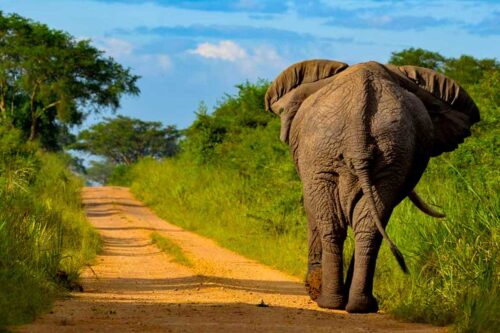
Queen Elizabeth National Park is home to four members of Africa’s famous Big Five:
- Elephants
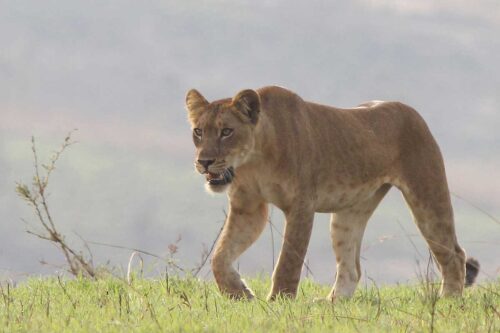
- Lions
- Leopards
- Buffaloes
The park supports more than 95 mammal species, making it one of the richest wildlife areas in Uganda. During a typical game drive, visitors may encounter:
- Hippos
- Uganda kobs
- Waterbucks
- Warthogs
- Giant forest hogs
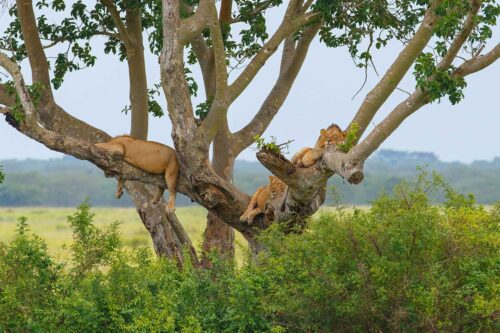
One of the park’s most famous attractions is the population of tree-climbing lions in the Ishasha sector. These lions are often seen resting in the branches of large fig trees, creating one of the most unique wildlife sightings in Africa.
The park is also home to several primate species, including:
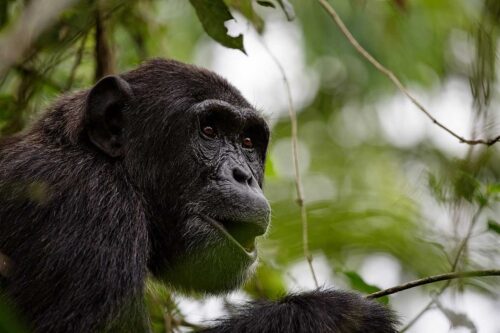
- Chimpanzees in Kyambura Gorge
- Baboons
- Vervet monkeys
- Black-and-white colobus monkeys
Birdwatchers are particularly drawn to Queen Elizabeth National Park. With more than 620 recorded bird species, it ranks among the best birding destinations in Africa.
Scenic Landscapes
The landscapes of Queen Elizabeth National Park are incredibly diverse and picturesque. Visitors can enjoy views of volcanic crater lakes scattered across rolling green hills, wide savannah plains stretching toward the horizon, and the magnificent Kazinga Channel.
The Kazinga Channel connects Lake Edward and Lake George and is one of the park’s most popular attractions. The channel attracts large concentrations of wildlife including:
- Elephants
- Buffaloes
- Hundreds of hippos
- Numerous water birds
The Ishasha sector in the southern part of the park is another highlight. This vast savannah is famous for its tree-climbing lions and offers spectacular game viewing opportunities.
Climate
Queen Elizabeth National Park has a tropical climate with two rainy seasons:
- March to May
- September to November
Daytime temperatures are generally warm, while mornings and evenings can be cooler. The coolest months are usually June and July.
The park receives an average annual rainfall of up to 2,390 mm, with elevations ranging from about 910 meters near Lake Edward to approximately 1,390 meters in the crater region. Temperatures typically range between 18°C and 28°C.
Why Visit Queen Elizabeth National Park?
Queen Elizabeth National Park is one of the most rewarding safari destinations in Africa. The park combines remarkable wildlife diversity with stunning landscapes and unique safari experiences.
Visitors can enjoy:
- Game drives across vast savannah plains
- Boat cruises along the Kazinga Channel
- Chimpanzee tracking in Kyambura Gorge
- Birdwatching in one of Africa’s richest birding areas
- Searching for tree-climbing lions in Ishasha
Whether you are visiting Uganda for the first time or returning for another adventure, Queen Elizabeth National Park offers unforgettable moments filled with wildlife, scenery, and authentic safari experiences.
Most Popular Attractions in Queen Elizabeth National Park
Big Game and Wildlife
Queen Elizabeth National Park is one of the best wildlife destinations in Uganda. The park is home to more than 95 mammal species, including four members of Africa’s famous Big Five:
- Elephants
- Lions
- Leopards
- Buffaloes
Although rhinos are no longer found in the park, they can be seen at the nearby Ziwa Rhino Sanctuary when traveling to or from Murchison Falls National Park.
Other wildlife commonly spotted in Queen Elizabeth National Park includes:
- Uganda kob
- Waterbuck
- Warthog
- Spotted hyena
- Giant forest hog
- Cape buffalo
The park also supports more than 57 vegetation types, including savannah grasslands, acacia woodlands, wetlands, and forest habitats that sustain its rich wildlife populations.
Birdlife
Queen Elizabeth National Park is a paradise for birdwatchers. With more than 620 recorded bird species, it is one of the best birding destinations in Africa.
The park hosts a wide variety of bird species across different habitats such as wetlands, forests, savannah plains, and crater lakes.
Mweya Peninsula
The Mweya Peninsula sits at the heart of Queen Elizabeth National Park and is one of the most visited areas in the park. It overlooks Katwe Bay on Lake Edward and serves as a hub for many safari activities.
The peninsula offers beautiful views, comfortable accommodation options, and a small souvenir shop where visitors can purchase gifts and crafts.
Kazinga Channel
The Kazinga Channel stretches for about 40 kilometers, linking Lake George to Lake Edward. This natural waterway is one of the most famous attractions in Queen Elizabeth National Park.
The channel attracts large numbers of animals throughout the year, including:
- Hippos
- Crocodiles
- Elephants
- Buffaloes
- Numerous water birds
A boat cruise along the Kazinga Channel offers some of the best wildlife viewing opportunities in the park.
Nearby areas such as the North Kazinga Plains and the Kasenyi Plains are also excellent for game drives, particularly for spotting lions hunting the large herds of Uganda kob.
The Equator and the Queen’s Pavilion
The Equator line runs through Queen Elizabeth National Park and offers visitors a unique photo opportunity.
Nearby is the Queen’s Pavilion, located at the northern entrance to the Crater Drive. This pavilion was originally constructed to host Queen Elizabeth II during her visit to Uganda in 1954.
The site was later upgraded and renovated again in 2007 during a visit by the Duke of Edinburgh. Today, the pavilion includes a small coffee shop and visitor facilities.
Ishasha Plains
The Ishasha sector, located about 100 kilometers south of Mweya, is famous for its unique population of tree-climbing lions.
This remote and scenic region includes savannah woodlands, the Ishasha River, and parts of Lake Edward. It supports a variety of wildlife and bird species, including the rare shoebill stork.
Things to Do in Queen Elizabeth National Park
Game Drives
Game drives are the most popular way to explore Queen Elizabeth National Park. The main wildlife viewing areas include:
- Kasenyi Plains
- North Kazinga Plains
- Ishasha Sector
During a game drive, visitors may see elephants, buffaloes, lions, leopards, warthogs, Uganda kobs, and many bird species.
Boat Safaris
A boat cruise along the Kazinga Channel is one of the most memorable experiences in the park. The two-hour trip offers excellent opportunities to observe wildlife at close range.
Animals commonly seen during the cruise include:
- Hippos
- Crocodiles
- Elephants
- Buffaloes
- Water birds
Birdwatching
Birdwatchers visiting Queen Elizabeth National Park can expect to see an impressive variety of species. Some of the notable birds found in the park include:
- Black bee-eater
- African skimmer
- Papyrus gonolek
- Martial eagle
- Shoebill stork
- Flamingos around the crater lakes
With over 600 species to discover, birdwatching in the park is rewarding throughout the year.
Nature Walks and Hikes
Guided nature walks are available in several areas of the park, including:
- Maramagambo Forest
- Kyambura Gorge
- Mweya Peninsula
These walks provide opportunities to explore the park’s ecosystems at a slower pace while observing birds, butterflies, primates, and plant life.
Chimpanzee Tracking
Kyambura Gorge, also known as the Valley of Apes, offers chimpanzee tracking experiences. This dramatic forested gorge is home to a small population of wild chimpanzees.
Trekking through the gorge allows visitors to observe these primates in their natural habitat while also spotting other monkeys and forest wildlife.
Explosion Crater Drive
The Explosion Crater Drive is a scenic route through rolling hills and volcanic crater lakes.
One of the most famous sites along this route is Katwe Salt Lake, where visitors can learn about traditional salt mining practices. The drive covers about 27 kilometers and offers some of the most dramatic landscapes in the park.
Hot Air Balloon Safaris
Hot air balloon safaris provide a unique aerial view of Queen Elizabeth National Park. These early morning flights offer panoramic views of the savannah plains, crater lakes, the Kazinga Channel, and the distant Rwenzori Mountains.
From the air, visitors may spot elephants, buffaloes, antelopes, and other wildlife moving across the landscape. Balloon safaris are operated by certified pilots and approved by Uganda’s Civil Aviation Authority.
Where to Stay in Queen Elizabeth National Park
Queen Elizabeth National Park offers a wide range of accommodation options suitable for every budget and travel style.
Popular accommodation options include:
- Mweya Safari Lodge – a classic luxury lodge overlooking the Kazinga Channel
- Kyambura Gorge Lodge – an upscale lodge near chimpanzee trekking areas
- Jacana Safari Lodge – a beautiful lodge located near a crater lake
- Ihamba Safari Lodge – a comfortable mid-range lodge
- Enganzi Lodge – offering scenic views of the park
- Samba Safari Camp – a budget-friendly accommodation option
- Mweya Hostel – ideal for backpackers and budget travelers
Getting to Queen Elizabeth National Park
Queen Elizabeth National Park is easily accessible by both road and air.
By Road:
- From Kampala – approximately 389 kilometers (about 5–6 hours drive)
- Via Mbarara in the south – approximately 420 kilometers
- Via Fort Portal in the north – approximately 410 kilometers
These routes can be combined into a scenic safari circuit that includes other national parks such as:
- Lake Mburo National Park
- Kibale Forest National Park
- Semuliki National Park
Travelers coming from Bwindi Impenetrable National Park can enter Queen Elizabeth National Park through the Ishasha sector, creating a popular gorilla trekking and wildlife safari route.
By Air:
Charter flights can be arranged from Entebbe or Kajjansi to nearby airstrips including:
- Kasese Airstrip
- Mweya Airstrip
- Ishasha Airstrip