
Kibale Forest National Park
Kibale Forest National Park
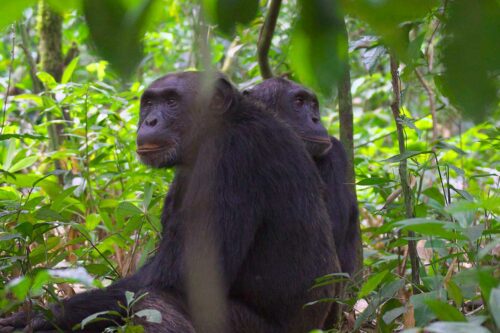
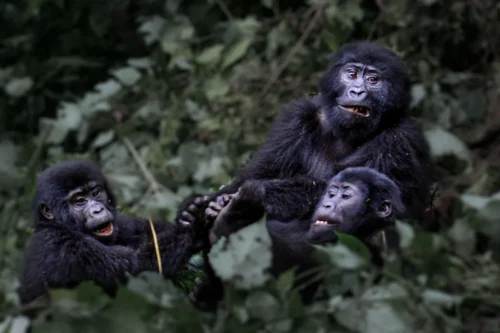
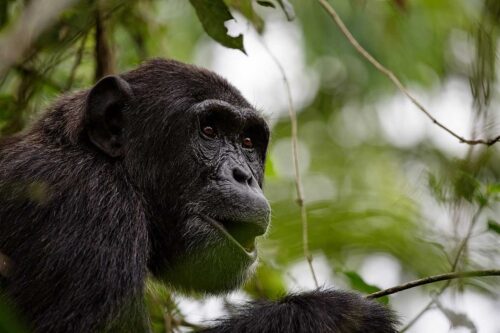
Kibale Forest National Park, covering about 795 square kilometers, is one of Uganda’s most beautiful and diverse tropical forests. It is famously home to a rich variety of wildlife, including 13 species of primates, with chimpanzees being the main attraction.
The forest stretches mainly across the elevated Fort Portal plateau, with the park’s highest point reaching about 1,590 meters above sea level. This northern area receives the most rainfall, especially between March to May and September to November, creating a cool and pleasant climate with temperatures ranging between 14°C and 27°C.
As you move southward, the land gradually slopes toward the warmer Albertine Rift Valley floor, where the forest transitions into open grasslands and the weather becomes hotter with less rainfall.
Kibale Chimpanzee Trekking Safaris
Explore our Kibale chimpanzee trekking safaris designed to offer unforgettable encounters with chimpanzees in Kibale Forest National Park. These packages are crafted to suit different travel styles, interests, and budgets while providing a rewarding primate experience.

History and Location of Kibale Forest National Park
Kibale was officially established as a national park in 1993. The park stretches south from Fort Portal and connects with Queen Elizabeth National Park, forming a large wildlife corridor of roughly 180 kilometers.
This natural corridor allows animals to move freely between the forests of Kibale and the savannas of Queen Elizabeth National Park, particularly between the remote Ishasha sector and the northern forests of Sebitoli.
The wider Kibale–Fort Portal region is also a major tourism hub in western Uganda. Within a short drive, visitors can explore:
- The scenic Ndali–Kasenda Crater Lakes
- The Rwenzori Mountains National Park
- Semuliki National Park
- Toro–Semliki Wildlife Reserve
This concentration of attractions makes the region one of the most rewarding areas for wildlife and nature tourism in Uganda.
Exploring Kibale Forest and the Crater Lakes Region
Kibale Forest, together with the nearby Ndali–Kasenda Crater Lakes, is a dream destination for nature lovers and independent travelers. The region offers stunning landscapes, comfortable accommodation options, and a variety of outdoor activities.
Visitors come to the area primarily for:
- Chimpanzee tracking
- Primate watching
- Birdwatching
- Nature walks
- Crater lake tours
Although chimpanzee tracking has become more expensive in recent years, Kibale still offers unforgettable wildlife experiences in one of Uganda’s most scenic forest environments.
Unique Habitats and Biodiversity
Kibale’s landscape includes a mix of habitats that support remarkable biodiversity. These habitats range from moist evergreen forests on the Fort Portal plateau to semi-deciduous forest and open savanna near the rift valley floor.
The central area around Kanyanchu features towering trees that can reach heights of over 55 meters. These giant trees form a layered canopy that allows filtered sunlight to reach the forest floor, supporting a rich undergrowth of:
- Herbs
- Shrubs
- Ferns
- Forest grasses
In total, Kibale Forest National Park contains more than 350 species of trees.
Primate Diversity in Kibale Forest
Kibale is widely known as the primate capital of East Africa because it hosts the highest diversity of primates on the continent.
The park supports around 1,450 chimpanzees, which is the largest population in Uganda.
Other primate species found in Kibale include:
- L’Hoest’s monkeys
- Red colobus monkeys
- Black-and-white colobus monkeys
- Blue monkeys
- Grey-cheeked mangabeys
- Red-tailed monkeys
- Olive baboons
- Bush babies
- Pottos
During a typical visit—especially if you explore both forest and swamp trails—it is common to see five to six different primate species in a single day.
Other Wildlife in Kibale National Park
Kibale Forest National Park is also home to at least 60 mammal species. Although primates dominate the forest, other wildlife species inhabit the park as well.
Animals that live in Kibale include:
- Lions
- Leopards
- Elephants
- Buffaloes
- Hippos
- Warthogs
- Giant forest hogs
- Bushpigs
- Bushbucks
- Sitatungas
- Red and blue duikers
The elephants in Kibale belong to the forest elephant subspecies, which are smaller and hairier than savanna elephants. They occasionally move into the Kanyanchu area during the wet season but are rarely seen by visitors.
Birdwatching in Kibale Forest National Park
Kibale is also a fantastic destination for birdwatching, with around 335 bird species recorded in the park.
Some notable bird species include:
- Nahan’s francolin
- Cassin’s spinetail
- Blue-headed bee-eater
- Masked apalis
- Green-breasted pitta
Birdlife in Kibale overlaps somewhat with nearby Semliki National Park, although Kibale also supports more wetland and grassland bird species.
Birdwatching at Bigodi Wetland Sanctuary
One of the best birdwatching spots near Kibale is the Bigodi Wetland Sanctuary. A guided trail through the wetland typically lasts about four hours and takes visitors through several habitats rich in birdlife.
Experienced guides help visitors locate rare and localized bird species that might otherwise be difficult to spot. The sanctuary is also well known for primates, butterflies, and community-based conservation projects.
Things to Do in Kibale Forest National Park
Kibale Forest National Park offers a wide range of activities for nature lovers, wildlife enthusiasts, and birdwatchers. The most popular experience is chimpanzee tracking, but visitors can also enjoy guided forest walks, birdwatching in Bigodi Wetland Sanctuary, night walks, and exploring the surrounding crater lakes and villages.
If your schedule is limited, it’s best to choose the activity that interests you most for the morning. This is when chimpanzees are most active and when bird activity is at its peak.
Chimpanzee Tracking in Kibale Forest
The highlight of most visits to Kibale is the guided chimpanzee tracking experience starting from Kanyanchu Visitor Centre. Treks depart twice daily:
- Morning session: 8:00 AM
- Afternoon session: 2:00 PM
While sightings can never be fully guaranteed, the chances of seeing chimpanzees are now about 90%. The chimpanzee community in Kibale is well habituated to humans, allowing visitors to observe them from only a few meters away.
During the trek you may also encounter other primates such as:
- Grey-cheeked mangabeys
- Red-tailed monkeys
- Black-and-white colobus monkeys
Experienced ranger guides help visitors interpret the forest environment, pointing out bird calls, medicinal plants, animal tracks, and other fascinating aspects of the ecosystem.
Chimpanzee Habituation Experience
For travelers who want a deeper encounter with chimpanzees, Kibale also offers a Chimpanzee Habituation Experience. This full-day activity allows visitors to accompany researchers and habituators as they observe chimpanzee behavior.
Participants spend extended time following chimpanzees while learning about their feeding patterns, communication, and social interactions.
Night Walks in Kibale Forest
Guided night walks offer an exciting chance to discover the forest after dark. These walks typically run from 7:30 PM to 10:00 PM and reveal a completely different side of Kibale’s wildlife.
Nocturnal species commonly seen include:
- Bush babies
- Pottos
- Nocturnal birds
- Various insects and frogs
Night walks provide a unique opportunity to experience the sounds and atmosphere of the rainforest at night.
Bigodi Wetland Sanctuary
Located near Bigodi Trading Centre, Bigodi Wetland Sanctuary is one of the best community-run ecotourism projects in Uganda. The sanctuary is managed by the Kibale Association for Rural and Environment Development (KAFRED), and tourism revenue supports local community projects such as schools and libraries.
The sanctuary features a 4.5-kilometer circular trail through a swamp ecosystem that is famous for its birdlife and primates.
Visitors can see up to six different primate species along the trail, including:
- Red colobus monkeys
- Red-tailed monkeys
- L’Hoest’s monkeys
- Black-and-white colobus monkeys
- Grey-cheeked mangabeys
The swamp also hosts sitatunga antelope, serval cats, mongooses, and many butterfly species.
Birdwatching at Bigodi Wetland
Bigodi Wetland Sanctuary is considered one of the best birdwatching locations in western Uganda. During a single walk, visitors may observe around 40 bird species.
Notable birds include:
- Great blue turaco
- Papyrus gonolek
- Various barbets and woodpeckers
- Hornbills
- Sunbirds
- Parrots
Morning walks are generally best for birdwatching, although afternoon walks also offer excellent wildlife viewing opportunities.
Exploring Around Kanyanchu and Bigodi
Although walking unaccompanied inside the forest is not permitted, visitors can explore certain areas around Kanyanchu and Bigodi independently.
Bird species commonly seen around the Kanyanchu camp area include:
- Great blue turaco
- Hairy-breasted barbet
- Black-necked weaver
- Black-and-white casqued hornbill
- Red-chested paradise flycatcher
The grassland trail around the camp is also a good place to observe monkeys and butterflies.
Sebitoli Sector and Kihingami Wetlands
Sebitoli is located in the northern section of Kibale along the Fort Portal–Kampala highway. It is quieter than the Kanyanchu area and is easily accessible for day trips from Fort Portal.
Although chimpanzee tracking is not available here, guided forest walks provide excellent opportunities to see:
- Red colobus monkeys
- Black-and-white colobus monkeys
- Blue monkeys
- Vervet monkeys
The area is also home to more than 230 bird species.
Nearby Kihingami Wetlands offer guided walks and cycling tours where visitors can explore bird habitats and visit surrounding tea estates. These tours are available daily and provide an interesting cultural and nature experience outside the park.
Plan Your Safari to Kibale Forest National Park
When planning your visit to Kibale Forest National Park, it is important to consider how you want to spend your time in and around the forest. The park entrance fee is higher than many other parks in Uganda, so it helps to plan your activities carefully to make the most of your visit. Fortunately, the Kibale region offers several attractions both inside and outside the park.
For example, some excellent birdwatching areas such as the Kihingami Wetlands and Magombe Swamp lie outside the park boundaries. If your main interest is birding in these areas, it may not be necessary to stay inside the park itself.
The good news is that you do not need to pay the park entrance fee if you are:
- Driving through the Fort Portal–Kamwenge road that passes through the forest
- Staying at guesthouses around Bigodi Trading Centre
- Visiting the Bigodi Wetland Sanctuary
This makes the Kibale region flexible for different travel styles, whether you are staying inside the forest or exploring the surrounding communities and wetlands.
Best Time to Visit Kibale Forest National Park
Kibale Forest National Park can be visited throughout the year, but the region experiences two main seasons: the dry season and the wet season.
- Dry Season: June to September and December to February
- Wet Season: March to May and October to November
The dry season is generally the most popular time to visit because forest trails are easier to navigate, making chimpanzee trekking and nature walks more comfortable.
However, the wet season also has its advantages. The forest becomes lush and vibrant, and bird activity increases significantly. For birdwatchers, the rainy months can actually be one of the most rewarding times to visit.
How to Get to Kibale Forest National Park
Kibale Forest National Park is located in western Uganda, approximately 26 kilometers southeast of Fort Portal. The park can be reached either by road or by air.
By Road
Driving to Kibale is the most common option. The journey from Kampala takes about 5 hours, depending on the route and road conditions.
Main road routes include:
- Kampala – Mubende – Fort Portal route (the shortest and most common route)
- Kampala – Mbarara – Kamwenge route
The main tourism hub in the park is Kanyanchu Visitor Centre, where chimpanzee tracking begins. Kanyanchu can be accessed:
- From the north via Fort Portal (300 km of paved road plus about 36 km of gravel road)
- From the south via Mbarara and Kamwenge
The Sebitoli sector is easier to reach because it sits directly along the Fort Portal–Kampala highway, about 16 kilometers before Fort Portal.
Public transport options are also available:
- Regular buses operate between Kampala and Fort Portal
- Minibuses run between Fort Portal and Kamwenge, passing near Kanyanchu
By Air
Travelers who prefer to fly can take domestic flights from Entebbe International Airport or Kajjansi Airfield to nearby airstrips.
Common flight destinations include:
- Kasese Airstrip
- Nyakisharara Airstrip (Mbarara)
From either airstrip, visitors continue to Kibale by road transfer arranged by their tour operator or lodge.
Where to Stay in Kibale Forest National Park
Kibale offers a wide range of accommodation options, from luxury lodges overlooking crater lakes to comfortable mid-range camps and budget-friendly guesthouses.
Luxury Lodges in Kibale
- Primate Lodge – Located close to Kanyanchu Visitor Centre inside the park, offering convenient access to chimpanzee tracking.
- Ndali Lodge – A peaceful luxury lodge overlooking crater lakes and surrounded by scenic landscapes.
- Kyaninga Lodge – Built on the rim of Lake Kyaninga with spectacular views of the Rwenzori Mountains.
- Crater Safari Lodge – Located near the park boundary overlooking Nyinabulitwa Crater Lake.
- Papaya Lake Lodge – Set within the Ndali–Kasenda Crater Field with views of crater lakes and the Rwenzori Mountains.
Mid-Range Lodges
- Chimpanzee Forest Guesthouse – Located about 23 km from Fort Portal within a scenic tea plantation.
- Chimps Nest – Situated at the park boundary with views of the forest and the Rwenzori Mountains.
Budget Accommodation
- Kibale Forest Camp – A comfortable budget option offering around 10 safari tents set within the forest.
- Rwenzori View Guesthouse – A simple and affordable guesthouse in Fort Portal.
- Nyinabulitwa Country Resort and Safari Camp – Budget accommodation near the park with great natural surroundings.
Accommodation in Fort Portal
Many visitors also choose to stay in Fort Portal town, which offers additional lodging options and easy access to Kibale.
- Mountains of the Moon Hotel – A comfortable mid-range hotel in Fort Portal.
- Rwenzori View Guesthouse – A popular budget option for travelers exploring the region.
Whether you prefer a luxury lodge overlooking crater lakes or a simple forest camp close to the park, Kibale offers accommodation choices for every type of traveler.