
Bwindi Impenetrable National Park
Bwindi Impenetrable National Park
Located in southwestern Uganda, Bwindi Impenetrable National Park is one of Africa’s most untouched and pristine montane forests. This dense jungle lies along the edge of the Albertine Rift and spans three districts: Kisoro, Kanungu, and Kabale. From Kampala, the drive takes about 10 hours, covering roughly 534 kilometers. The park also borders the Democratic Republic of Congo.
Bwindi offers a one-of-a-kind adventure where nature thrives and biodiversity is unmatched. Visitors have the rare chance to connect deeply with the environment and local culture while experiencing one of the world’s most remarkable wildlife destinations.
A visit here is truly life-changing. It’s more than just a trip—it’s an opportunity to experience nature at its most raw and real while supporting vital conservation efforts that protect the forest and its wildlife.
Bwindi Gorilla Trekking Safaris
Explore our Bwindi gorilla trekking safaris designed to give you unforgettable encounters with mountain gorillas in Bwindi Impenetrable National Park. These packages are crafted to suit different travel styles, interests and budgets while offering a truly rewarding safari experience.
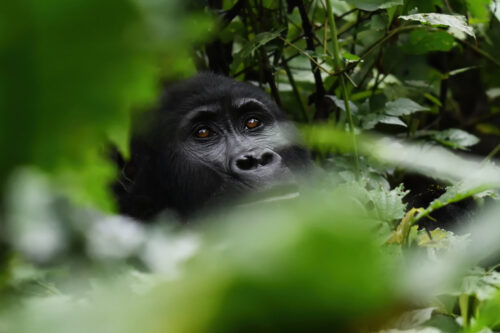
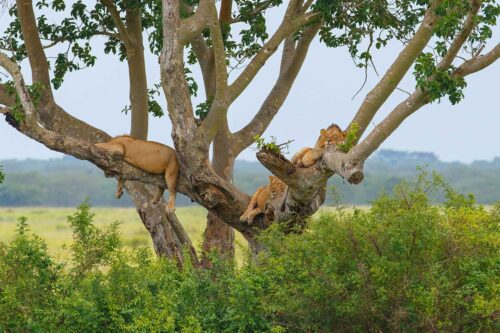


Mountain Gorillas and Wildlife
Bwindi is home to more than 460 mountain gorillas, almost half of the world’s remaining population. The forest covers approximately 33,000 hectares and is teeming with wildlife.
Species found in Bwindi include:
- Over 120 mammal species
- More than 250 butterfly species
- 250 tree species
- 27 frog species
- Numerous reptiles including snakes, lizards, and chameleons
Primate species include:
- Mountain gorillas
- Chimpanzees
- Black-and-white colobus monkeys
- Blue monkeys
- Red-tailed monkeys
- L’Hoest monkeys
- Grey-cheeked mangabeys
- Olive baboons
The park lies on the Albertine Rift and spans about 331 square kilometers of thick tropical rainforest, serving as an important water catchment area in Uganda.
Conservation Significance
Bwindi Impenetrable National Park is a UNESCO World Heritage Site and an important sanctuary for endangered species. The forest protects both mountain gorillas and chimpanzees—two of Africa’s great apes listed on the IUCN Red Data List.
The park also supports 346 bird species, including several that are rare or globally threatened.
Notable bird species include:
- Dwarf Honeyguide (Near Threatened)
- African Green Broadbill
- Kivu Ground Thrush (Near Threatened)
- Forest Ground Thrush
- Grauer’s Rush Warbler (Vulnerable)
- Chapin’s Flycatcher
- Shelley’s Crimsonwing (Near Threatened)
Biodiversity in Bwindi
For its size, Bwindi contains extraordinary biodiversity, including:
- 120+ mammal species
- 346 bird species
- 202 butterfly species
- 163 tree species
- 100 fern species
- 27 frog, chameleon, and gecko species
This diversity makes Bwindi one of Africa’s richest ecosystems.
Main Attraction: Gorilla Trekking
The highlight of any visit to Bwindi is gorilla trekking. The park has 19 habituated gorilla families, and only eight visitors are allowed to visit each group per day.
Trekking routes pass through:
- Dense rainforest
- Rivers and waterfalls
- Swamps and valleys
- Rich vegetation zones
Along the way, visitors may also encounter monkeys, birds, and other forest wildlife.
Park Size and Accessibility
Bwindi spans approximately 331 square kilometers of montane and lowland rainforest. While a road passes through part of the park (Kabale–Ruhija–Buhoma), most of the forest can only be explored on foot.
History of Bwindi Impenetrable National Park
The forest was originally designated as the Impenetrable Forest Reserve in 1942. It later became Bwindi Impenetrable National Park in 1992 and was declared a UNESCO World Heritage Site in 1994.
The name “Bwindi” comes from the local Lukiga language, meaning “Impenetrable,” referring to the forest’s thick vegetation and rugged terrain.
Altitude and Climate
Bwindi sits at elevations ranging from 1,190 meters to 2,607 meters. The highest point is Rwamunyonyi Hill, located on the eastern edge of the park.
The park experiences a tropical climate with two rainy seasons:
- March to May
- September to November
Temperatures typically range between 7°C and 28°C, depending on elevation.
Local Communities Around Bwindi
The forest was originally inhabited by the Batwa pygmies, traditional hunter-gatherers who lived within the forest for generations.
Other neighboring communities include:
- The Bakiga
- The Bakonjo
Population density around the park averages about 350 people per square kilometer.
What to See in Bwindi
Along with mountain gorillas, visitors can encounter numerous wildlife species. The park hosts 11 primate species and a variety of birds and insects.
Some animals found in the forest include:
- Chimpanzees
- Red-tailed monkeys
- Blue monkeys
- Black-and-white colobus monkeys
- Grey-cheeked mangabeys
- L’Hoest monkeys
- Olive baboons
Nature walks also offer opportunities to observe butterflies and forest wildlife.
Birdlife in Bwindi
Bwindi is considered one of Africa’s most important birding destinations, with more than 350 bird species.
Among these:
- 23 species are Albertine Rift endemics
- 14 species are not found anywhere else in Uganda
Notable birds include:
- African Green Broadbill
- White-tailed Blue Flycatcher
- Brown-necked Parrot
- White-bellied Robin-Chat
- Frazer’s Eagle Owl
Top Activity: Gorilla Trekking
Bwindi’s gorilla trekking takes place across four main sectors:
- Buhoma
- Ruhija
- Nkuringo
- Rushaga
Each sector hosts several habituated gorilla families that visitors can track.
Gorilla Families by Sector
Buhoma Sector
- Mubare
- Habinyanja
- Rushegura
- Katwe
Rushaga Sector
- Mishaya
- Busingye
- Kahungye
- Bweza
- Nshongi
Ruhija Sector
- Bitukura
- Oruzogo
- Kyaguriro
Nkuringo Sector
- Nkuringo
- Christmas
A Uganda gorilla trekking permit costs $800 and can be obtained through licensed tour operators or directly from the Uganda Wildlife Authority (UWA).
Gorilla Habituation Experience in Bwindi National Park
Perhaps your dream has always been to spend more time with a group of mountain gorillas in the wild, but you have not been sure which destination offers that opportunity. If so, then Bwindi National Park has you covered. The Gorilla Habituation Experience is one of the most exclusive and rewarding primate adventures in Uganda, giving visitors more time with gorillas than the standard trek.
For this unique activity, two gorilla groups have been set aside, and they include Bushaho and Bikingi. What makes this primate adventure especially special is that it takes the whole day to search for and follow the gorillas, and it includes 4 hours of the magical encounter once they are found. To take part in this thrilling experience, you need $1500 to secure a permit.
Generally, habituation is the process of making gorillas get used to human presence, and it lasts for about 2 years before they are officially opened for gorilla trekking. For travelers who want a deeper, longer, and more immersive gorilla experience, this is one of the finest wildlife activities available anywhere in Africa.
How Gorilla Trekking Works in Bwindi Impenetrable National Park
Gorilla trekking in Bwindi is one of the most powerful wildlife experiences on a Uganda safari. The trek takes visitors through dense rainforest in search of mountain gorillas, with each tracking group accompanied by park rangers and guides. Gorilla tracking is done in a group of 8 tourists plus park rangers tracking per group. There are 36 habituated mountain gorilla groups open for gorilla tracking in Bwindi Impenetrable Forest National Park. With this, it means there are only 288 permits available for gorilla tracking in Bwindi per day, making it difficult to get a last-minute booking.
The length and difficulty of the trek vary tremendously because the gorillas move continuously through the rainforest depending on the natural conditions at the time of your trek. The terrain is often steep and goes through areas where there are no marked paths. Gorilla trekking can be very strenuous. It may take just a couple of hours, but it can also last for a full day of up to 8 hours or more of hiking in hot, high-altitude conditions. For this reason, it is always important to be as fit as possible and to prepare well before your visit.
The weather can also change with very little warning, which is why the right clothing, footwear, and gear are so important for a successful trekking experience.
How to Book Gorilla Trekking in Uganda
The first step in booking a Gorilla tracking Safari in Uganda is securing and purchasing a Gorilla Permit. You can only purchase this from Uganda Wildlife Authority. A Gorilla Permit costs USD800 per person per trek for Foreign Non-Residents, USD700 for East African Residents, and USD80 for East African Citizens.
Once you have your planned travel dates, you let us know and we check for availability of space for Gorilla tracking Experience with Uganda Wildlife Authority. Once we confirm availability, we go ahead and book for you tentatively. We then send you an invoice for payment, and once this is done, you send proof of payment so that we secure the permit accordingly. After purchase, we send you a scanned copy of your permits for your records and perusal.
Because permits are limited, it is always better to book your permit in advance at least 3-5 month prior visiting so that you do not miss out on the few permits available.
Nature Walks in Bwindi Impenetrable Forest National Park
For nature enthusiasts on Uganda tours, a nature walk in Bwindi Impenetrable Forest National Park offers a chance to get close to its natural wonders beyond gorilla trekking. The park has distinct trails, each with its own scenery, wildlife, and birdlife.
These trails include, among others, the Munyanga River trail, which is popular for its primate species, birds, and many others. The Waterfall trail takes you to the 3 scenic waterfalls. The Muzubijiro loop gets you the best views over Bwindi forest, the Western Rift Valley, the Virunga volcanoes, and more. The Bamboo trail is characterized by 14 different vegetation types. The Ivi river trail is ideal for bird watching, while the Buhoma village tourist walk takes you to the Batwa and Bakiga community. Other notable trails include the Rushura trail and others.
These walks are perfect for travelers who want to experience Bwindi’s rainforest environment in a slower, quieter, and more immersive way.
Bird Watching in Bwindi
Bwindi Impenetrable Forest Park is truly a birder’s paradise. Over 350 bird species are all confined within this beautiful protected area, and they include the western green tinker bird, chestnut throated apalis, Kivu ground thrush, montane oriole, African green broadbill, collared apalis, shinning African blue, common bulbul, white tailed fly catcher, fine banded woodpecker, short tailed warbler, and many others.
Whether you are a dedicated birding enthusiast or simply a traveler who enjoys wildlife, Bwindi’s incredible bird diversity adds yet another reason to spend more time in the park.
Cultural Encounters in Bwindi
A trip to Bwindi is not only about magical encounters with the rare mountain gorillas. It is also an opportunity to enjoy some of the finest African cultural experiences. A cultural tour in this pristine national park takes you to the Batwa and Bakiga communities.
While there, you have a chance to enjoy thrilling traditions, cultures, dances, music performance, and more. These visits add a meaningful human connection to your safari and allow you to appreciate the heritage of the communities that live around the forest.
Other thrilling safari activities for you to take part in while on a Uganda safari in Bwindi National Park include mountain biking, village walks, and others.
Best Time to Visit Bwindi National Park
Safaris in Bwindi Impenetrable Forest National Park can be done at any time of the year, but most importantly, the dry and wet season are the two significant seasons any traveler on a Uganda safari should put into consideration.
The dry season starts from June to September and December to February, and this is normally the more ideal time for safaris, especially for visitors on a gorilla tour. During this period, trails are generally easier to navigate and conditions are more favorable for trekking.
The rainy or wet season is equally perfect and begins from March to May and October to November. Although rain can make trekking more challenging, the park remains beautiful and accessible, and many travelers still enjoy rewarding safaris during these months.
Getting to Bwindi Impenetrable National Park
It is easy to get to Bwindi Impenetrable National Park. Bwindi is reachable by road or air.
By road, you need 8-10 hours to drive from Kampala or Entebbe to this park, and a 4 WD safari car is very necessary for your navigation. From Kabale, drive for about 108 kilometers to Buhoma via Ruhija, which takes about 3 hours. The Kampala-Buhoma route is good from Kabale to Ntungamo. From Ntungamo, drive for 45 kilometers to Rukungiri, then continue via Kambuga to Kanungu and finally come to Butogota, about 17 kilometers to Buhoma park headquarters.
Other routes are also possible. For those planning to set off via Kasese or Fort Portal, you can take the Katunguru route, Ishasha, and Kihihi.
Public transport is also available. A bus runs daily from Kampala to Butogota, from which a taxi can be hired for the last 17km to Buhoma. There is no public transport to Nkuringo, but vehicles can be hired in Kisoro.
By air, travelers can fly from Entebbe or Kampala (Kajjansi airfield) to the modern tarmac airstrip at Kisoro. Visitors to Buhoma can charter planes to the grass Kayonza airstrip. Another good option is to take a flight from Entebbe and then land into Kisoro airstrip, from where you can easily connect to Bwindi Impenetrable Forest National Park.
Safari Lodges in Bwindi Impenetrable National Park
Bwindi Impenetrable National Park is the most popular of Uganda’s national parks. Home to almost half of the remaining mountain gorillas, Bwindi is the most visited of all Uganda’s parks. If you are traveling for gorilla trekking or any activity in this park, you can stay in either luxury, midrange, or budget safari lodges.
Luxury Lodges in Bwindi
Luxury lodges include Buhoma Lodge, Chameleon Hill Lodge, Gorilla Forest Camp, Clouds Mount Gorilla Lodge, Mahogany Springs Lodge, Gorilla Safari Lodge, and Ruhija Gorilla Safari Lodge.
Buhoma Lodge is an upmarket facility in the northern part of the park in the Buhoma area. It comes with an elevated lounge area, solar power, bar, fireplace, mosquito-proof rooms, gravity-fed water supply, dining facilities, Wi-Fi, and recharging facilities with UK square 3 pin plugs 240v in the central area.
Chameleon Hill Lodge is located on the shores of Lake Mutanda, offering views of the lake, the Virunga Mountains, and Bwindi National Park. For tourists tracking gorillas in the southern sectors of Rushaga and Nkuringo, this is one of the best places to stay. It has 10 private cottages with distinct colors that feature the background. Its restaurant takes 20 people, and it has five twin rooms.
Clouds Mount Gorilla Lodge is situated in Nkuringo sector and stands at 2000 meters above sea level. It faces the 8 Virunga Mountains when you are within Bwindi National Park and comes with eight cottages, a lounge, bar, restaurant, reading room, and many more.
Gorilla Forest Camp is located in Buhoma sector to the north of Bwindi, where the treks start from just at the entrance of the park. It features eight chalets with adequate space, two queen-sized beds, comfortable warm beds, and a huge bathtub overlooking the park. It also has a lounge, campfire place, dining area with silver service, a small spa, and a bar.
Gorilla Safari Lodge features eight cottages offering en suite facilities with hot and cold running water, flush toilets, solar lights, fireplace, private veranda, restaurant, bar, and many more.
Mahogany Springs Camp features super and presidential suites with twin, double, and triple arrangements, luxurious double doors and windows, private terraces overlooking the surroundings, and advanced mosquito nets.
Volcanoes Safaris Bwindi Lodge is located in the north and comes with 8 bandas and stunning views of the forest canopy, as well as private terrace and en suite bathrooms.
Midrange Lodges in Bwindi
Midrange lodges include Gorilla Mist Camp, Rushaga Gorilla Camp, Nkuringo Gorilla Camp, Silverback Lodge Bwindi, Eco Marvels Gorilla Resort, Engagi Lodge Bwindi.
Budget Lodges in Bwindi
For budget travelers, options include Buhoma community rest camp, Broadbill forest camp, Wagtail Eco Safari camp, Gift of nature lodge, Nshongi camp, and Ruhija community rest camp.
Broadbill Forest Camp is situated in the Ruhija area, east of Bwindi Impenetrable Forest National Park, and is ideal for visitors who wish to track gorilla groups like the Oruzogo, Kyaguriro, and Bitukura. It has four tents with self-contained washrooms and offers twin, double, and single bed arrangements, as well as a bar and restaurant.
Buhoma Community Rest Camp comes with six en suite safari tents, 3 en suite cottages, a six bed dormitory, two non-self-contained twin cottage bandas, and a campsite.
Other budget lodges in Bwindi National Park include Bwindi View Bandas, Gift of Nature Lodge, Nshongi Camp, Nshongi Gorilla Resort, Ruhija Community Rest Camp, and Eco Safari Camp.
Frequently Asked Questions About Bwindi Gorilla Safaris
How long and tough is Gorilla Trekking in Uganda, Bwindi Forest National Park?
Gorilla trekking in Bwindi Impenetrable Forest National Park timings and conditions vary tremendously as the gorillas move continuously through the rainforest depending on natural conditions at the time of your trek. It is good to be prepared, and remember the weather can change with very little warning.
The terrain is often steep and through areas where there are no marked paths. It can be very strenuous. It may be just a couple of hours, but it can also be for a full day of up to 8 hours or more of hiking in hot, high-altitude conditions. Therefore, please be prepared by being as fit as possible.
How to book Gorilla Trekking in Uganda?
The first step is securing and purchasing a gorilla permit through the Uganda Wildlife Authority. Once your travel dates are known, availability can be checked and a tentative booking made. After payment is completed, the permit is secured and a scanned copy is sent for your records. Because of the limited number of permits available each day, booking in advance is always strongly recommended.
Plan Your Bwindi Safari Experience
Bwindi Impenetrable National Park is one of the most rewarding destinations for a Uganda safari. Whether your focus is gorilla trekking, the gorilla habituation experience, nature walks, bird watching, cultural encounters, or simply staying in one of the park’s beautiful lodges, Bwindi offers a deep and unforgettable connection to Uganda’s natural beauty and wildlife.
For detailed information about planning a visit to Bwindi, you can check out resources such as Visit Bwindi – a Resource to planning a gorilla trek and Bwindi Impenetrable National Park – A comprehensive guide to exploring the Bwindi Impenetrable Forest and neighboring areas.
If you are ready to experience the magic of Bwindi, planning ahead with the right permits, route, and lodge will help make your safari smooth, exciting, and truly memorable.