Top Wildlife Sounds You’ll Hear in Kibale National Park.

Exploring Kibale National Park: Uganda’s Primate Paradise.
June 14, 2026
Family-Friendly Activities in Kibale National Park.
June 21, 2026
.
Top Wildlife Sounds You’ll Hear in Kibale National Park.
The Top wildlife sounds you’ll hear in Kibale National Park, When most travelers think about visiting Kibale National Park, they imagine thrilling chimpanzee encounters, lush rainforest scenery, and incredible wildlife sightings. However, one of the most memorable experiences in this remarkable forest is something that cannot always be seen, it can only be heard.
Located in western Uganda, Kibale National Park is widely recognized as the country’s primate capital and one of Africa’s richest tropical rainforest ecosystems. The park is home to an astonishing variety of wildlife, including chimpanzees, monkeys, birds, butterflies, forest mammals, and countless other species. While visual encounters are undoubtedly exciting, the sounds of the forest create an equally unforgettable experience.
As you walk beneath towering trees and through dense vegetation, the rainforest comes alive with a remarkable natural soundtrack. From the distant calls of chimpanzees echoing through the canopy to the melodic songs of tropical birds and the mysterious cries of nocturnal creatures, every sound reveals a hidden story about life within the forest.
In fact, many experienced safari travelers believe that listening to Kibale is just as rewarding as seeing it. The sounds provide valuable clues about wildlife movements, animal behavior, and the overall health of the ecosystem.
In this guide, we’ll explore the most fascinating wildlife sounds you are likely to hear while exploring Kibale National Park and discover why they play such an important role in the rainforest experience.
Why Wildlife Sounds Are Important in Kibale National Park.
Before exploring the individual sounds, it is important to understand why listening is such a valuable skill in the rainforest.
Unlike open savannah landscapes, Kibale’s dense vegetation often limits visibility. Many animals remain hidden high in the canopy or deep within thick undergrowth. As a result, visitors frequently hear wildlife before they see it.
Professional guides often rely on animal calls, rustling leaves, and vocalizations to locate wildlife. These sounds help them determine the presence, direction, and behavior of animals within the forest.
By paying attention to the rainforest soundtrack, visitors can:
- Detect nearby wildlife
- Understand animal communication
- Improve wildlife viewing opportunities
- Enhance photography experiences
- Gain a deeper appreciation of the ecosystem
Consequently, listening carefully can transform an ordinary forest walk into a truly immersive wildlife adventure.
1. The Powerful Pant-Hoots of Chimpanzees.
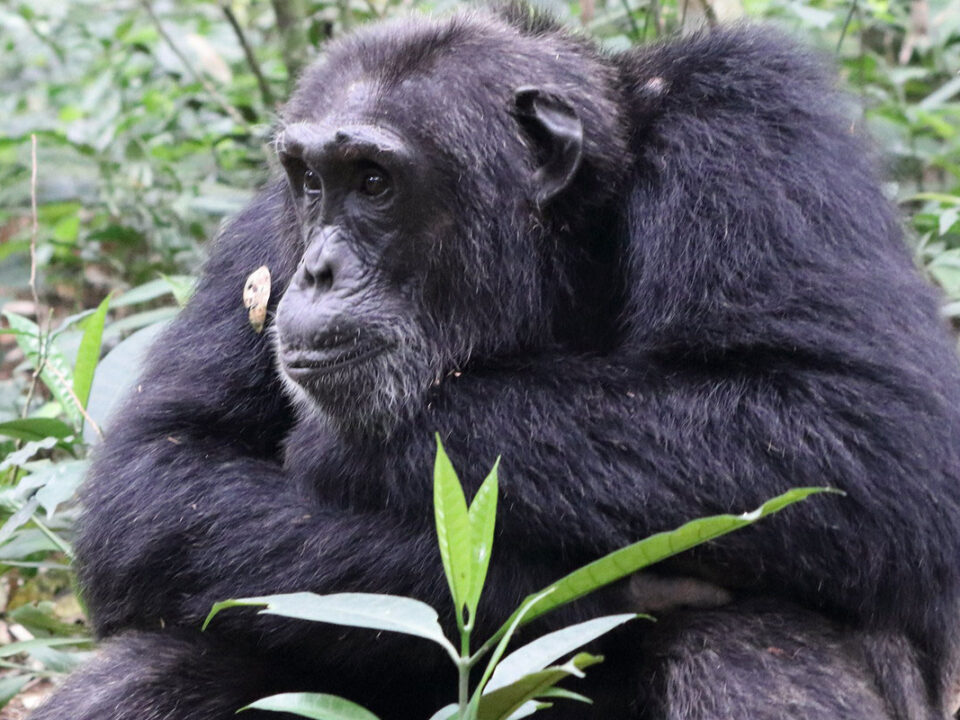
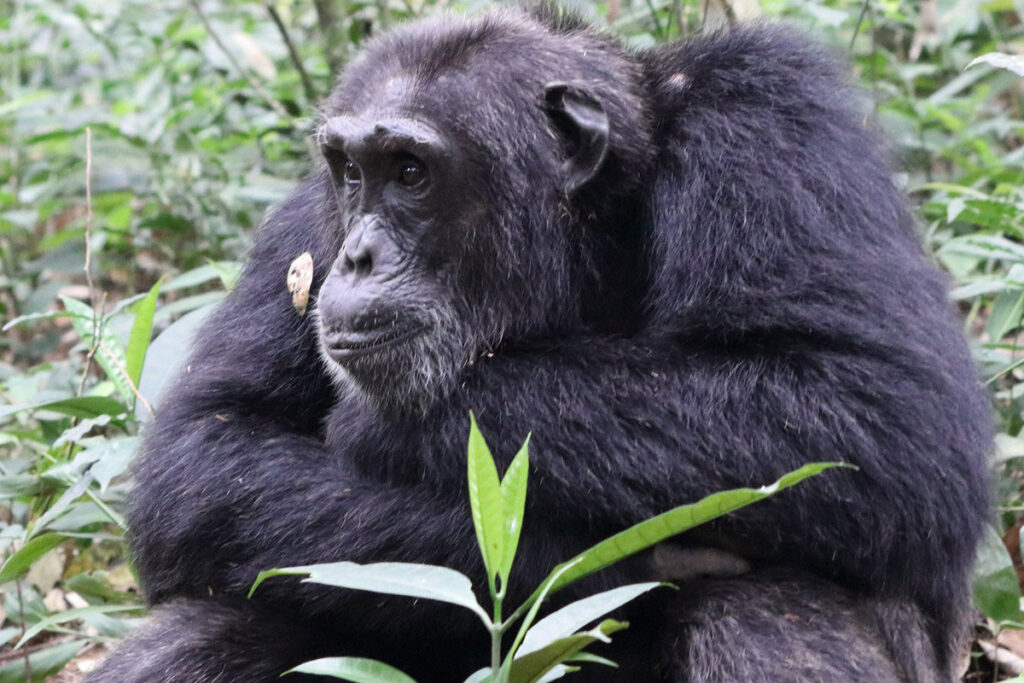
The most iconic sound in Kibale National Park is undoubtedly the chimpanzee pant-hoot.
This distinctive vocalization can travel for several kilometers through the rainforest and often signals the presence of a nearby chimpanzee community.
Chimpanzees use pant-hoots for various reasons, including:
- Communicating with group members
- Announcing their location
- Coordinating movement
- Strengthening social bonds
- Displaying dominance
The call typically begins with soft grunts and rhythmic breathing before building into loud screams, barks, and high pitched hoots.
For many visitors, hearing a chimpanzee pant-hoot for the first time is one of the most exciting moments of their safari. Even before spotting the animals, the sound creates anticipation and excitement throughout the trek.
2. Red Colobus Monkey Calls.
Red Colobus Monkeys are among the most vocal primates found in Kibale National Park.
These social monkeys constantly communicate while feeding, traveling, and interacting with one another high in the forest canopy.
Their vocalizations include:
- Chirps
- Squeaks
- Alarm calls
- Contact calls
Because they often move in large groups, their calls create a lively atmosphere within the forest.
Hearing Red Colobus Monkeys usually indicates that an active troop is nearby, offering excellent wildlife viewing opportunities.
3. Black-and-White Colobus Monkey Sounds.
Black-and-White Colobus Monkeys are generally quieter than some of Kibale’s other primates. Nevertheless, attentive visitors can often hear their distinctive sounds.
These include:
- Deep grunts
- Soft growls
- Communication calls between troop members
Additionally, the crashing and rustling of branches as they leap through the canopy frequently reveal their location.
Even when hidden among the treetops, these monkeys contribute significantly to the forest’s natural soundtrack.
4. Grey-Cheeked Mangabey Vocalizations.
Grey-Cheeked Mangabeys are among the most energetic and vocal primates in Kibale.
They communicate through a wide range of sounds, including:
- Barks
- Chirps
- Grunts
- Alarm calls
Because these monkeys are highly social, visitors often hear continuous vocal exchanges as groups move through the forest.
Their lively personalities and frequent communication make them one of the most entertaining primates to encounter during a nature walk.
5. The Distinctive Call of the Great Blue Turaco.
Among Kibale’s more than 375 bird species, few are as recognizable as the Great Blue Turaco.
This large and colorful bird produces a loud, repetitive barking call that echoes through the forest.
Many birdwatchers hear the Great Blue Turaco long before they see it. In fact, locating the source of its call often becomes part of the excitement.
Its unique vocalization contributes significantly to the magical atmosphere of Kibale’s rainforest.
6. African Grey Parrot Screeches.
The African Grey Parrot is famous for its remarkable intelligence and vocal abilities.
In Kibale National Park, these parrots often travel in noisy flocks, producing loud calls that are impossible to ignore.
Their sounds include:
- Sharp screeches
- Social whistles
- Contact calls
Visitors frequently hear these birds flying overhead before catching sight of them among the treetops.
Their vocalizations add another dynamic layer to the rainforest soundscape.
7. Crowned Eagle Calls.
The Crowned Eagle is one of Africa’s most powerful birds of prey and an important predator within Kibale’s ecosystem.
Its piercing calls carry impressive distances through the forest and are often heard during:
- Territorial displays
- Nesting activities
- Communication between mates
Interestingly, the presence of a Crowned Eagle can trigger alarm calls from monkeys and other wildlife, creating a ripple effect of sounds throughout the forest.
8. Bushbaby Cries During Night Walks.
As darkness falls, Kibale’s soundtrack changes dramatically.
One of the most fascinating nighttime sounds comes from bushbabies, also known as galagos.
Although these nocturnal primates are relatively small, they produce surprisingly loud calls that echo through the forest.
Their vocalizations include:
- Sharp screams
- High-pitched whistles
- Repetitive cries
- Contact calls
Many first-time visitors are astonished by the volume of these sounds compared to the animal’s tiny size.
9. Forest Elephant Rumbles and Movements.
While forest elephant sightings are relatively uncommon, visitors occasionally hear evidence of their presence.
Sounds associated with forest elephants include:
- Deep rumbles
- Heavy footsteps
- Breaking branches
- Rustling vegetation
Because these animals often remain hidden within dense vegetation, their sounds create a sense of mystery and excitement.
Hearing a forest elephant move through the rainforest is a memorable experience that few visitors forget.
10. Tree Hyrax Calls at Night.
One of Kibale’s most surprising sounds comes from the tree hyrax.
Despite being a relatively small mammal, the tree hyrax produces loud, eerie screams that can be startling for first-time visitors.
Many people initially assume the sounds come from a much larger animal.
As night settles over the forest, these haunting calls become a distinctive part of Kibale’s nocturnal atmosphere.
11. Insect Choruses That Fill the Forest.
Not all wildlife sounds come from large animals.
In fact, insects play a major role in creating Kibale’s unique rainforest soundtrack.
As evening approaches, thousands of insects contribute to a chorus of:
- Buzzing
- Chirping
- Clicking
- Humming
After rainfall, insect activity often intensifies, creating an especially vibrant acoustic environment.
These constant background sounds provide the rhythm that defines life in the rainforest.
12. Frog Calls from Wetlands and Swamps.
The wetlands surrounding Kibale, particularly the famous Bigodi Wetland Sanctuary, support numerous frog species.
During humid evenings and after rainfall, frogs create an impressive chorus of sounds, including:
- Croaks
- Chirps
- Clicks
- Deep resonant calls
Together, these vocalizations enrich the biodiversity experience and add another layer to the park’s natural orchestra.
Best Times to Experience Wildlife Sounds in Kibale.
Different animals become active at different times of the day, meaning the forest soundtrack changes continuously.
Early Morning.
This is often the most active period for:
- Chimpanzees
- Birds
- Monkeys
- Forest mammals
Midday.
Although quieter, visitors may still hear:
- Bird calls
- Monkey vocalizations
- Movement through the canopy
Evening and Night.
After sunset, an entirely new world of sounds emerges, including:
- Bushbabies
- Tree hyraxes
- Frogs
- Insects
- Nocturnal birds
For the most complete experience, consider participating in both daytime and nighttime forest activities.
Tips for Enjoying Kibale’s Wildlife Soundscape.
To fully appreciate the sounds of the rainforest:
Walk Quietly.
Reducing noise allows you to hear subtle wildlife activity more clearly.
Follow Your Guide.
Experienced guides can often identify species solely from their vocalizations.
Pause and Listen.
Taking a few moments to stand still helps reveal sounds that may otherwise go unnoticed.
Minimize Conversations.
Quiet observation enhances both wildlife encounters and personal enjoyment.
In Brief
The sounds of Kibale National Park are an essential part of what makes this rainforest one of Uganda’s most extraordinary wildlife destinations. While visitors often arrive eager to see chimpanzees and other primates, they soon discover that listening to the forest can be equally rewarding.
From the powerful pant-hoots of chimpanzees and the calls of colorful birds to the haunting cries of bushbabies and tree hyraxes, every sound tells a story about life within this thriving ecosystem.
Ultimately, Kibale’s remarkable soundtrack transforms a simple nature walk into a deeply immersive wilderness experience. For travelers seeking a genuine connection with nature, the wildlife sounds of Kibale National Park create memories that will linger long after the adventure has ended. At bamba safaris we make your safari unforgettable.