
Birding at Lake Mburo: Birdwatcher’s Guide to Uganda’s Hidden Gem.

Chimpanzee Civil War in Kibale Forest National Park.
September 13, 2026
Gorilla Trekking in Bwindi from Kisoro Town.
October 5, 2026
Birding at Lake Mburo: A Birdwatcher’s Guide to Uganda’s Hidden Gem.
Birding at Lake Mburo is one of the most rewarding wildlife experiences in Uganda. While many travelers visit Lake Mburo National Park for zebras, impalas, giraffes and boat safaris, the park also offers excellent birdwatching opportunities.
Located in western Uganda between Kampala and the major safari destinations of southwestern Uganda, Lake Mburo is a convenient stop for travelers heading toward Bwindi Impenetrable National Park, Mgahinga Gorilla National Park or Queen Elizabeth National Park.
The park’s mix of savanna, wetlands, lakes, woodland and rocky landscapes creates habitats for a remarkable variety of bird species. For birdwatchers, this diversity means you can encounter different birds throughout the day while enjoying the park’s beautiful scenery.
Whether you are an experienced birder or simply enjoy photographing wildlife, birding at Lake Mburo deserves a place on your Uganda safari.
Why Go Birding at Lake Mburo?
Lake Mburo National Park has a combination of habitats that supports many different bird species. The park’s open grasslands attract ground-feeding birds while woodland areas provide shelter and food for forest and savanna species.
The wetlands around Lake Mburo are especially important for waterbirds. During a boat trip, you can watch birds feeding along the shoreline, resting on vegetation or flying across the water.
Another advantage is accessibility. Lake Mburo is relatively close to Kampala compared with several other Ugandan national parks. This makes it a practical destination for a short birding safari or a stopover during a longer Uganda wildlife adventure.
Birding here also feels relaxed. You can combine birdwatching with game drives, walking safaris, horseback experiences and boat trips. As a result, you do not have to choose between birding and other wildlife activities.
Bird Habitats in Lake Mburo National Park.
Understanding the habitats is one of the easiest ways to improve your birdwatching experience. Different environments attract different species.
1. Lake and Wetland Habitats
Lake Mburo and its surrounding wetlands support a variety of water-associated birds. The calm waters and vegetation provide feeding and nesting areas for several species.
Look along the shoreline and around papyrus-covered areas. You may see kingfishers, herons, egrets and other waterbirds.
A boat safari is particularly useful because it allows you to approach some birds from the water without disturbing them.
2. Open Savanna
The park’s open grasslands are ideal for spotting birds that feed on insects, seeds and small animals.
Keep your eyes on the ground as well as in the sky. Some species spend considerable time walking through the grass rather than sitting in trees.
The same open landscapes also make bird photography easier because there are fewer dense vegetation barriers.
3. Woodland Areas
Woodland habitats provide opportunities to find birds that prefer trees and shrubs.
Listen carefully when moving through wooded areas. Bird calls can reveal species that are difficult to see immediately.
Early morning is particularly productive because many birds are active and vocal before the heat of the day increases.
4. Rocky and Bushy Areas
Lake Mburo’s rocky landscapes and bush-covered areas add another layer of habitat diversity.
These areas can attract species that prefer dry or semi-open environments. Slow driving or walking can help you notice birds perched on rocks, shrubs and low branches.
Birds to Look For at Lake Mburo.
One of the most exciting aspects of birding at Lake Mburo is the variety of species you can encounter.
Among the birds commonly associated with the park and its habitats are:
- African finfoot
- African fish eagle
- Malachite kingfisher
- Pied kingfisher
- Giant kingfisher
- Grey crowned crane
- Papyrus gonolek
- African wattled lapwing
- Rufous-bellied heron
- Bateleur
- Lilac-breasted roller
- Common sandpiper
- Black-headed weaver
- Long-tailed cisticola
- Southern red bishop
- African jacana
- Yellow-breasted apalis
- White-winged warbler
The African finfoot is one of the birds that attracts particular interest from birdwatchers. This secretive waterbird can be difficult to spot because it often stays close to vegetation and moves quietly along waterways.
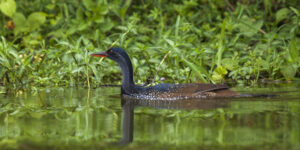
Another memorable species is the African fish eagle. Its distinctive call and striking appearance make it a favorite among both birders and wildlife photographers.
Best Places for Birding at Lake Mburo.
Different areas of the park can produce different bird sightings. Exploring several habitats gives you a better chance of building a diverse bird list.
Around Lake Mburo
The lake shoreline is an important area for waterbirds. Watch carefully around vegetation, shallow water and open sections of the lake.
A boat safari can provide excellent opportunities to observe birds from a different perspective.
Game Drive Tracks
The park’s game tracks pass through several habitats. This makes them useful for combining birdwatching with general wildlife viewing.
Drive slowly and avoid rushing from one sighting to another. Birds can appear suddenly on the road or in nearby vegetation.
Wetland Areas
Wetlands are worth exploring because they attract species that may not be found in the drier sections of the park.
Pay attention to reeds, papyrus, shallow pools and muddy edges.
Woodland and Bushland.
These areas are excellent for smaller birds. Instead of scanning only the open landscape, look into tree canopies, bushes and shaded areas.
Best Time for Birding at Lake Mburo.
Birding is possible throughout the year at Lake Mburo. However, different seasons can offer different experiences.
The wetter months can be productive because vegetation becomes greener and food availability increases. Migratory birds may also be present during Uganda’s broader migratory period, adding extra variety to the bird list.
The drier months can make some birds easier to spot because vegetation may be less dense. Animals also tend to gather around remaining water sources, which can create opportunities to combine birdwatching with wildlife viewing.
For dedicated birdwatchers, carrying out the trip across different seasons can reveal species and behaviors that you may not notice during a single visit.
Best Time of Day for Birdwatching.
Early morning is generally one of the most productive times for birding at Lake Mburo.
Birds are active after sunrise and temperatures are usually more comfortable. Their calls also make it easier to locate species before the landscape becomes busier.
Late afternoon can provide another good birding window. As temperatures begin to fall, some birds become active again.
For the best experience, consider planning both an early morning and late afternoon birding session.
Birding by Boat on Lake Mburo
A boat safari is one of the best ways to add variety to a birding trip.
From the water, you can explore parts of the shoreline that are difficult to reach by vehicle. The slower pace also gives you time to watch birds behaving naturally.
Keep binoculars ready and scan the shoreline carefully. Kingfishers may appear near the water while herons and other waterbirds can be found around shallow areas.
A boat trip can also become a memorable photography experience because reflections on the lake create attractive natural backgrounds.
Birding and Wildlife Viewing Together.
One of the biggest advantages of Lake Mburo is that you can combine birding with traditional wildlife viewing.
The park is known for animals such as zebras, impalas, buffaloes, topi and giraffes. While looking for these animals, keep scanning the trees and grasslands for birds.
This combination makes Lake Mburo suitable for travelers who do not want a safari focused exclusively on birdwatching.
You can spend part of the morning looking for birds and wildlife on a game drive before enjoying a boat safari later in the day.
Walking Safaris for Birdwatchers.
A guided walking safari can add a completely different dimension to birding.
When you are on foot, you move at a slower pace. You can stop whenever you hear a bird call and spend more time examining vegetation.
Walking also allows you to notice smaller details that may be missed from a vehicle.
However, always follow the instructions of your ranger or guide. Wildlife remains unpredictable and visitors should maintain appropriate distances from animals.
What to Pack for Birding at Lake Mburo.
Good preparation can make your birding experience much easier.
Consider packing:
- Binoculars
- A camera with a suitable telephoto lens
- Field guide or birding app
- Notebook or bird checklist
- Comfortable walking shoes
- Lightweight clothing
- Hat and sunglasses
- Insect repellent
- Sunscreen
- Reusable drinking water
- Rain jacket during wet weather
Binoculars are especially important. Many birds are small or stay high in trees, making them difficult to identify with the naked eye.
A field guide can also help you distinguish between similar species.
Bird Photography Tips at Lake Mburo.
Lake Mburo offers excellent opportunities for wildlife and bird photography.
Start by using a suitable telephoto lens that allows you to photograph birds without getting too close. Avoid chasing birds for a photograph because this can cause unnecessary stress.
Use the early morning light whenever possible. Softer light can create better detail and more natural-looking images.
Patience is also important. Instead of constantly moving, find a promising location and wait. Birds often return to favorite perches or feeding areas.
Most importantly, prioritize the welfare of the bird over the photograph.
Why Visit Lake Mburo on a Uganda Birding Safari?
Lake Mburo is particularly valuable for travelers who want a diverse safari experience without spending several days in one destination.
Its location makes it easy to include in a wider Uganda itinerary. You can combine birding at Lake Mburo with wildlife viewing before continuing toward western Uganda.
The park also offers a change of scenery. Its open savanna, wetlands, woodland and lake environment create a different experience from Uganda’s rainforest destinations.
For photographers, first-time birdwatchers and experienced birders, this variety creates plenty of opportunities to explore.
Plan Your Birding Experience with Bamba Safaris.
Birding at Lake Mburo offers more than simply checking species off a list. It is an opportunity to slow down, listen to the landscape and experience Uganda’s wildlife from a different perspective.
From colorful kingfishers and striking African fish eagles to secretive wetland species, the park can surprise you at almost every turn.
A well-planned visit can combine early morning birding, wildlife viewing, a boat safari and guided walking experiences. With the right guide and enough time, Lake Mburo can become one of the most memorable birding stops on your Uganda safari.
If you are planning a Uganda birding safari, Bamba Safaris can help you organize a Lake Mburo experience that fits your travel interests, schedule and wider safari plans.
